
A purging schedule shouldn’t be based on a simple rule like “run a purge every Friday.”
Some lines change colour several times a day. Others run the same resin for weeks. Then a difficult material change comes along and suddenly the machine needs a much deeper clean.
So the useful schedule is built around what the line actually does, not an arbitrary date on the calendar.
Start With Changeovers
How often does the machine move from one colour or resin to another?
That is probably the first thing to record. Frequent colour changes can leave pigment or previous material in the barrel, screw, hot runner or die, while more difficult resin transitions may need a different purging approach. UNICLEANPLUS™ supplies purging compounds for injection moulding, extrusion and blow moulding applications, with different grades and methods for different processing conditions.
A line changing from black to natural, for example, may need closer attention than two similar colours.
Don’t Ignore the Machine’s History
One machine may stay clean for a long time. Another seems to develop residue every few runs.
Look at the history.
Are black specks appearing? Is colour hang-up taking longer to clear? Are operators using increasing amounts of production resin just to flush the machine?
Those are useful signs that the current schedule may be too relaxed. If contamination keeps returning, there may also be a process or equipment issue behind it, so purging should not become the automatic answer to everything.
Build Different Rules for Different Situations
A practical schedule can have a few levels.
Routine purge: after regular colour or material changes where residue is expected.
Deep purge: when stubborn contamination, carbonised material or difficult resin changes show up.
Shutdown purge: when equipment is being taken out of service for an extended period and the machine needs to be left clean.
UNICLEANPLUS™ describes mechanical, chemical and hybrid purging options, with the appropriate method depending on contamination, equipment and process requirements.
That is much more useful than treating every purge as identical.
Watch the Actual Results
How do you know whether the schedule is working?
Track the changeover time, amount of purging material used, scrap produced and how many repeat purges are needed before the next resin runs clean.
If operators keep saying, “We had to do it again,” that’s data.
The company’s extrusion procedure, for example, recommends checking the discharged purge material for remaining contamination and repeating the process when necessary.
Keep the Schedule Flexible
Production plans change. A machine may suddenly switch materials, a rush order may reduce available cleaning time, or contamination may show up earlier than expected.
So keep the schedule as a working guide, not a rigid rule.
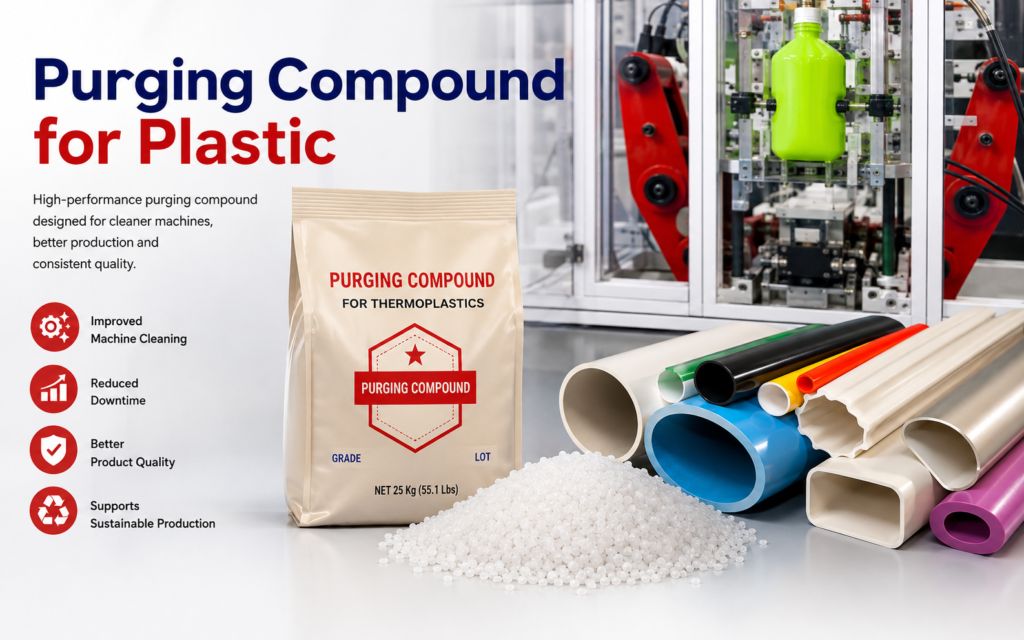
A Purging Compound for Plastic should be selected around the machine, processing temperature, material and contamination problem. UNICLEANPLUS™ provides different purging solutions and technical guidance for these applications.
The best schedule is the one that keeps changeovers predictable without wasting purging material unnecessarily. Keep the records, watch what the machine is telling you, and adjust when the process changes.