
Walk into two different moulding facilities running the exact same medical-grade Polypropylene or filled PA66, and you might see two entirely different worlds.
Plant A runs smoothly with minimal scrap rates and quick 15-minute colour transitions. Meanwhile, down the road, Plant B is dealing with constant black specks, severe streak contamination, and operators spending hours flushing virgin material down the drain during a basic shift change.
It feels bizarre on paper. The raw material supplier is identical, melt flow indexes match up, and the machine specs look nearly the same. Yet, one shop floor hits its OEE (Overall Equipment Effectiveness) targets effortlessly while the other loses massive machine hours to unscheduled teardowns.
The difference almost always comes down to what happens inside the barrel between production runs—specifically, how each facility handles internal carbon build-up and dead-spot accumulation.
1. Machine History and Hidden Dead Spots
No two processing machines wear down in the exact same pattern. Over months of running abrasive glass-filled engineering polymers or high-temperature resins like PC, tiny pitting and micro-scratches form along the screw flights and bimetallic barrel walls.
When resin sits in these low-flow zones, heat causes local thermal degradation. Plant A might actively seal their machines during weekend stops with non-corrosive chemical agents, while Plant B simply turns off heater bands and leaves raw polymer to bake. That oxidized residue in Plant B continuously flakes off into new batches, causing mysterious black spots that refuse to clear.
2. In-House Regrind vs Engineered Cleaners
Many processors try to save money by flushing barrels with virgin resin or cheap regrind. It seems cost-effective until you total up the actual numbers.
Using virgin plastic to clean out heavy pigments or carbonized layers works like trying to scrub a burnt pan with cold water. You end up burning through hundreds of kilograms of prime material while the core deposit stays glued to the check-ring and nozzle tip.
Plants that achieve short downtime numbers use engineered purging compounds designed with specific mechanical friction or heat-activated chemical expansion. Instead of just sliding over deposits, the compound penetrates complex hot runner channels and scrubs dead zones clean without relying on harsh abrasives that damage metal surfaces.
Real Floor Questions: Testing New Cleaning Methods
Q: Will switching cleaning agents mess with our sensitive mold surfaces?
Not if you select non-abrasive, non-corrosive formulations. Higher quality compounds rely on chemical expansion and surface-active scrubbing rather than heavy glass fibers or abrasive minerals. This protects bimetallic barrels, chrome dies, and delicate hot runner tips from premature scoring.
Q: How can we prove a trial compound actually saves money before buying bulk?
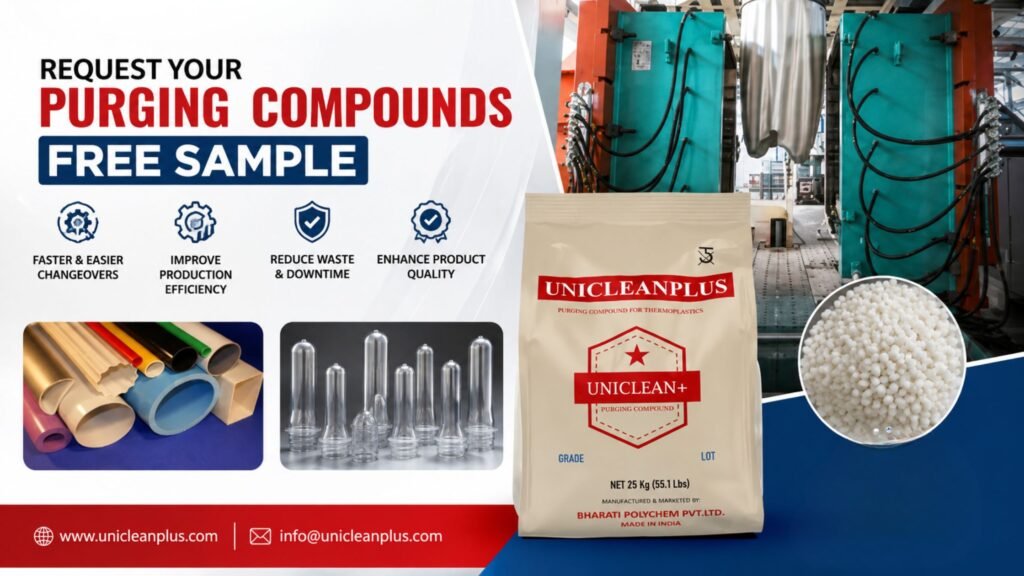
Requesting a Purging Compounds Free Sample allows your floor operators to test performance directly on your worst-performing machine. By measuring exact setup time saved and weight of wasted resin during a single stubborn color changeover, you get clear ROI data before committing to production orders.
3. Standard Operating Procedures (SOPs) During Color Shifts
Even with good materials, operator habits differ wildly across processing facilities:
- Temperature Control: Plant A boosts barrel temperatures slightly to loosen stubborn pigments before introducing purge material, then drops temps for maximum mechanical displacement.
- Back Pressure Adjustments: Increasing back pressure pushes the screw forward, ensuring the cleaning compound fills the flight depths completely rather than taking the path of least resistance.
- Shutdown Practices: Leaving unprotected melt in the barrel during overnight pauses invites oxygen degradation. Sealing the system prevents thermal oxidation entirely.
Purging Efficiency Impact:
├── Flushing with Regrind ──> High Volume Material Waste + 2-3 Hours Downtime
└── Engineered Compound ──> Low Volume Purge Usage + 15-20 Min Transition
Closing the Efficiency Gap in Your Facility
If your shop floor is struggling with unexplained rejection rates, high material scrap, or endless color bleeding, the root cause is rarely the virgin resin itself. It almost always lies in how effectively your team removes degraded contamination before new jobs start.
At UNICLEANPLUS™, we help plastic processors eliminate black specks and reduce transition downtime by up to 60%. Whether you operate injection molding presses, sheet extruders, or blow molding machinery, matching the right mechanical, chemical, or hybrid formulation to your process makes all the difference.
Want to see how your machine downtime compares? Reach out to our technical team today to request a Purging Compounds Free Sample and evaluate the performance directly on your own shop floor within 24 hours.
Testing a Free Sample under real operating conditions can be so valuable as It gives manufacturers practical evidence from their own equipment, helping them make informed decisions before investing in a long-term purging solution.