
You finish a colour change, start the line again and expect the new material to come through clean. But there they are again. Tiny black specks in the product. You purge the machine, run some more material, and the same problem comes back.
If this sounds familiar, carbon buildup in an extruder could be one of the causes.
Plastic can degrade when it stays inside a hot machine for too long. Some of that material sticks to the screw, barrel or die. It keeps getting heated, and over time, the residue becomes difficult to remove. A little buildup might go unnoticed at first. Then it starts showing up in the finished product.
Why Do Carbon Deposits Form?
There isn’t always one clear reason. Material can get trapped in areas where the flow is poor, especially around corners or spots where old resin doesn’t move out easily. High temperatures and long periods of processing can make the problem worse.
Colour changes can be tricky, too. You might have switched to a lighter resin and flushed out most of the previous material, but a small amount remains inside the machine. Later, it breaks loose and appears as dark marks in the new batch.
What Should Operators Look For?
Black specks are an obvious warning, particularly when the product was coming out clean earlier in the run. You may also notice dark streaks, uneven colour or a higher amount of rejected material during startup.
Another clue is a changeover that takes longer than it used to. You run fresh resin through the extruder, but contamination keeps appearing. That’s frustrating, especially when production is already behind schedule.
Of course, carbon deposits aren’t always to blame. Dirty raw material, incorrect temperatures or worn machine components can cause similar defects. It’s worth checking these possibilities rather than assuming every black mark comes from the screw or barrel.
Why Is the Buildup So Difficult to Clean?
Fresh resin can push out loose material, but hardened deposits are another problem. They may cling to internal surfaces or sit in areas that the normal material flow barely reaches.
Keep running production and those deposits can break loose later. That means more rejected product, extra purging and another interruption to the line. Sometimes a routine purge simply isn’t enough, and the machine needs a closer inspection.
Where Does a Purging Compound Help?
A suitable Purging Compound for Extruders helps remove leftover resin, colour contamination and stubborn deposits during cleaning or material changes. The grade needs to suit the polymer being processed, the machine and its operating temperature. One product won’t necessarily suit every extrusion line.
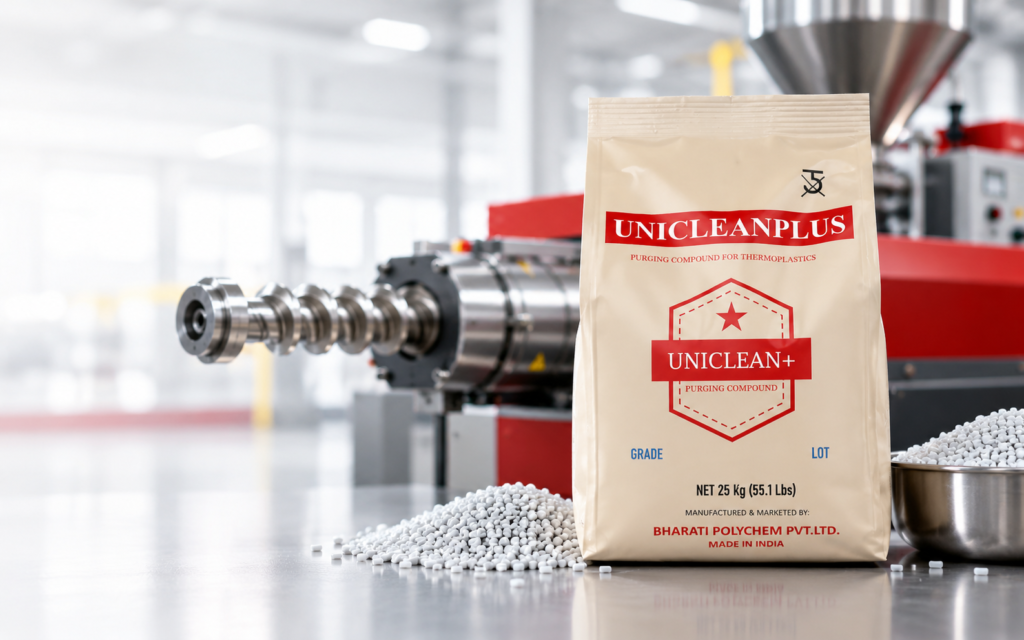
UNICLEANPLUS™ supplies purging compound for extrusion applications, including pipe, sheet, wire and blown-film production. The aim is to clear residual material from areas such as the screw, barrel and die, helping operators get the line ready for the next run.
Follow the product’s instructions and check the discharged material as you purge. If black specks keep returning, don’t keep repeating the same process without investigating the cause.
A small amount of residue can turn into a persistent production headache. Catching the signs early and using the right cleaning method can help reduce unnecessary waste and downtime.
For product details, visit the UNICLEANPLUS™ Purging Compound for Extruders page.